


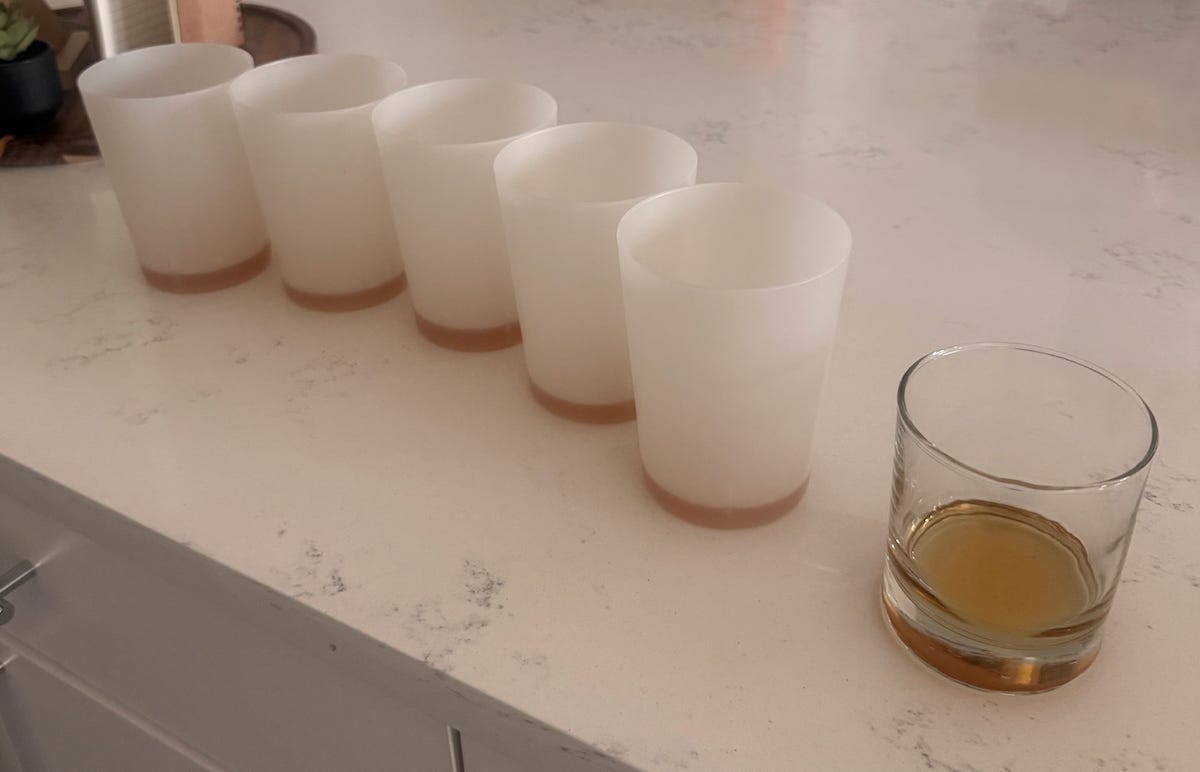
I’ve been trying to “detox my life” from plastic for a few weeks now. It’s had its ups and downs.
One thing I’ve noticed is that avoiding plastic has a high up-front mental cost. Before you can replace the products leeching hormone-disrupting chemicals and microplastics into your skin, mouth and lungs, you first have to identify them. That identification process requires a level of vigilance that, frankly, I am not used to deploying toward the objects in my home. Before doing this, it had not even registered to me that wearing invisible braces meant I was literally chomping on plastic 22 hours a day1. (Attentiveness in general may not be my strong suit.)
But after several days of inspecting stuff I’d previously only assessed for ease-of-use and aesthetics, I realized that even I—a person who’d thought of herself as fairly plastic-conscious2—had a lot more to notice. I’d never looked closely enough to realize my electric water kettle had little plastic parts on the inside; that my metal water bottle had a plastic straw; or that the pasta pot I’d thought was ceramic for the last four years was actually nonstick. I’d never clocked that I owned exactly zero non-polyester sweatshirts or sweatpants or bras or underwear. And I’d never stopped to think that my Ninja Creami was basically a tiny lathe for shaving microplastics.
Microplastics! They're everywhere!

An unhinged list of places scientists have found microplastics—including dolphin breath.
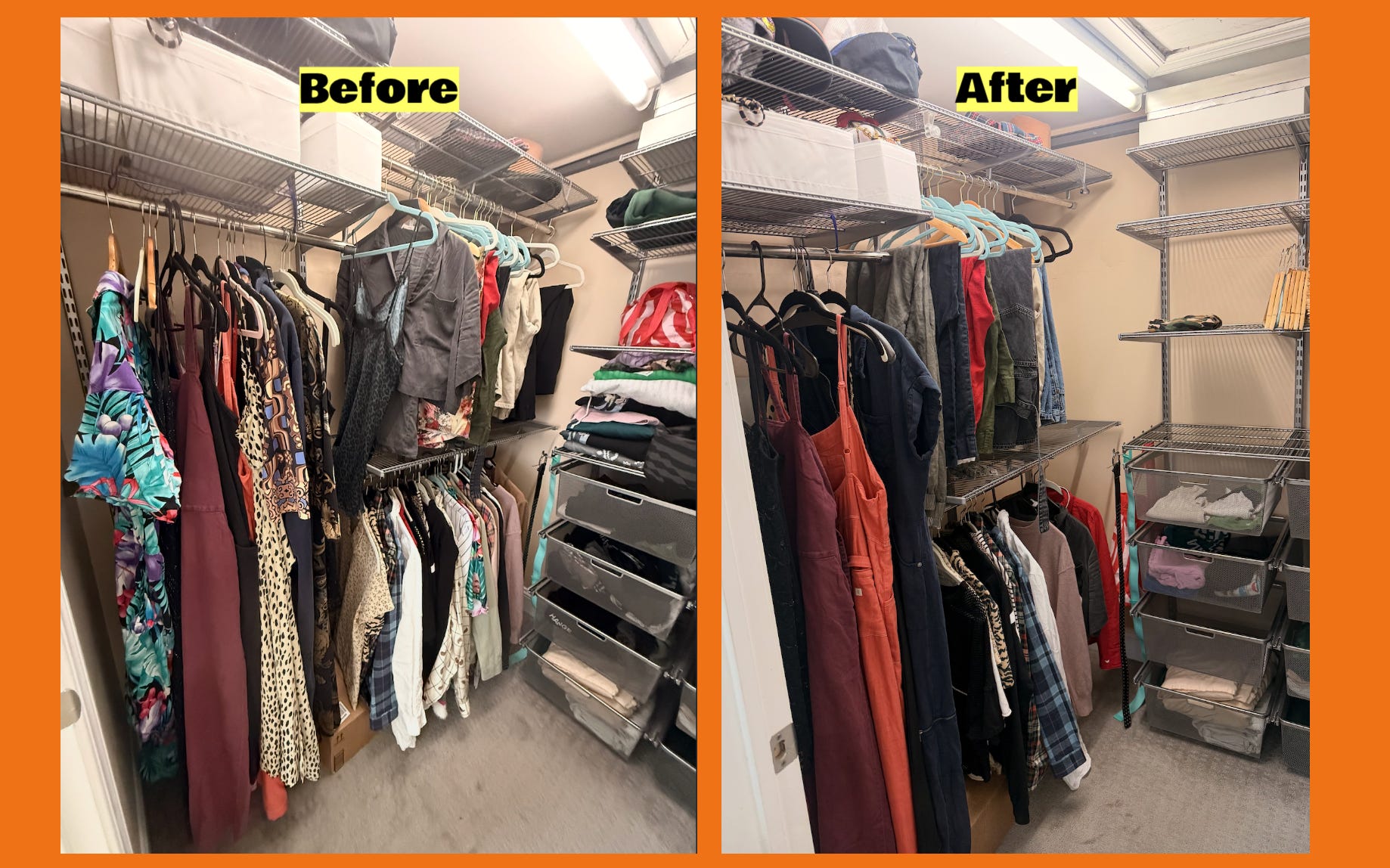
The act of noticing has not been completely annoying, though. While it was certainly easier to move through my life without really thinking about the objects I was using and touching, in retrospect, it was a little like sleepwalking. Being more mindful about my stuff has made me feel weirdly good about myself, like I’m at least trying to take care of me. I’m also getting this fun placebo effect from sorting out and storing all the polyester clothes in my closet3. Turns out, wearing natural-material clothes makes me feel about 20 percent healthier at all times—even if my partner did tease me for looking like a “crunchy food co-op member.” (To be fair, we were on our way to the food co-op when he said it.)
The act of buying new, non-plastic stuff is a different story. This, friends, feels mostly bad.
I’ve already spent a little over $1000 replacing high-impact items in my life—workout clothes, water kettle, underwear, etc—and I’m not even close to done. And while I can admit to a slight dopamine rush when I get something new and high-quality (I “oohed” and “aahed” when I got my stainless steel water kettle), the overarching feeling I’ve gotten from the buying process has been financial dread—not just for myself, but for anyone who chooses to move away from products that are demonstrably harming our health and the planet.4
And that financial dread quickly moves into rage when I remember that plastic is only “affordable” because it’s been made artificially cheap by policy. Since 2012, U.S. plastics plants have received $9 billion in state and local tax subsidies, shifting part of the industry’s costs onto the public before its products even reach the shelf. Combined with all the other subsidies we grant the fossil fuel industry, its extensive lobbying power, and the fact that we don’t have extended producer responsibility laws, I feel like I’m constantly being reminded that plastic is only cheap because its real costs are not built into the price. Because our officials care more about this massive corporate donor than the health of our bodies and the planet.
Anyway! Tracy recently asked me what’s been the most unexpected part of the plastic detox process so far. I told her: I always knew avoiding plastic would be annoying. I didn’t realize I would also have to become annoying. (Even more so than usual.)
Because in addition to the mental cost and the financial cost, there is a social cost to avoiding plastic. You have to be willing to become the person who constantly interrupts the flow of traffic to ask for a metal fork or a real glass, and bear whatever reaction people may have. I felt this most acutely last week when I traveled with a group of friends to Nashville, where plastic was the default material holding almost every piece of food and drink I received. If I had wanted to seriously avoid plastic that weekend, I would have had to opt out of whole pieces of the trip. I imagined it was like trying to be vegetarian in the 1990s, or gluten-free before 2010: functionally impossible unless you’re willing to make huge social sacrifices. I’m not. I just drank from the plastic cup.
I’m also lucky enough to have friends who are very supportive of any endeavor I’m taking for the planet or my health. But I don’t think that’s the case for most. I’m willing to bet there’s a large portion of people who, if they tried to avoid plastic in front of their friends, would be dismissed or eye-rolled or called a pussy. And I think this may be the thing that makes a plastic habit most hard to break: Not the act of replacing the straw, but the fear of becoming the person who makes everyone talk about the straw.
The upside, though, is that this also means there’s something useful you can do even if you’re not in a position to move away from plastic yourself. You can be cool to the people who are trying. My friends were cool to me, and it made a big difference. A couple even said they wanted to try it.
Anyway, those are all my thoughts for now, at least the ones I can put into written form. If you want to hear more specific details about my plastic detox, Tracy and I recorded a podcast episode about what I’ve been doing, what I’ve replaced, what I’m still struggling with, and what this process has made me notice about the need for systemic change. It’s at the top of the newsletter.
This episode is for paid subscribers only, not because I want it to be, but because giving everything we make away for free is unfortunately not turning out to be an incredible business strategy. I’d like to continue working with awesome people to help me with this project. The more people subscribe, the more I can give away for free! Also, if you subscribe, you can ask me anything you’d like in the comments about my personal process. I’m happy to answer.
I’ll update you all again when I get the results of my pee test back. Make sure you’re subscribed to get it.
In related recent news…
Now may actually be a good time to start shifting away from plastic. The American Prospect reports:
Petrochemical prices are spiking to four-year highs as the key ingredients, known as feedstocks, cannot get out of the Persian Gulf. Roughly $20 billion to $25 billion worth of petrochemical products moves through the strait annually, and about 40 percent of exports of polyethylene, used mostly in packaging and containers, came from the Middle East last year. Polyethylene prices are up 37 percent since February, and polypropylene prices are up 38 percent.
Oregon passed a law to shift more of the costs of plastic onto producers. But producers are fighting back. Central Oregon Daily reports:
The future of Oregon’s Recycling Modernization Act is up in the air after a federal judge said portions of the law may be illegal, and can’t be enforced without full argument. On Feb. 6, Judge Michael Simon issued his initial order in the lawsuit that aimed to overturn the law meant to reform Oregon’s recycling system.
Millions of pre-term births and thousands of infant deaths linked to phthalates: From NYU Langone:
Exposure to a chemical commonly used to make plastic more flexible may have contributed to about 1.97 million preterm births in 2018 alone, or more than 8 percent of the world’s total, a new analysis of population surveys shows. The chemical was also linked to the deaths of 74,000 newborns, the researchers further estimate….
According to the new work, [phthalate] exposure may have contributed to 1.2 million years lived with disability, a measure of all the years that people have lived or will live with illnesses, injuries, and other health issues caused by being born prematurely.
New study shows changing your personal care products actually does make a difference. From U.S. Right to Know:
The findings, published in the May issue of Environment International, indicate that switching from conventional personal care products to nontoxic alternatives can rapidly and significantly reduce exposure to harmful chemicals. Even a few changes in only a few days can lower body levels of substances linked to hormone disruption, cancer, developmental problems, and reproductive toxicity, the study shows.
I got my plastic braces removed in early April, not because of the plastic detox, but because I was due to get them removed. I’m currently navigating the process of getting a non-plastic retainer, a request my dentist was very confused about.
I already had all glass tupperware, cast iron and stainless steel cookware, a wooden cutting board, and sheets made of 100 percent cotton flannel or linen.
In addition to keeping items that are more than 90 percent cotton, linen, wool, and silk, I also decided (at least for now) to keep things made of Tencel, Lyocell, and Modal, which are technically made of wood pulp. But I might stow away those too if I find those are also exposure pathways to phthalates. Also, I can’t bring myself to throw out/donate/sell all my clothes yet. So for now they’re just stored away.
Doing a plastic detox also inevitably means you wind up spending money on shit that turns out not to be what you wanted. Example: I spent $155 on Birkenstocks because I was told they were all natural material, and then I get home and googled the specific shoe to put in my spreadsheet and realized the straps are actually made out of PVC. (You can find all my expenses, which I’ll continually update, here.)


