


Texas-based journalist Saul Elbein believes solid waste is the most important—and most overlooked—environmental story of our lifetimes.
Yes, he argues, climate change, air pollution, and liquid waste from fracking are crucially important issues. But across Texas and Oklahoma, he says fracking companies have been spreading their potentially radioactive, PFAS-filled solid waste on farmland and near communities, largely without scrutiny, for decades.
Saul told me he sees this as a modern-day Silent Spring: a slow-moving, mostly invisible contamination story hiding in plain sight, one that will only become undeniable once until the damage is already done.
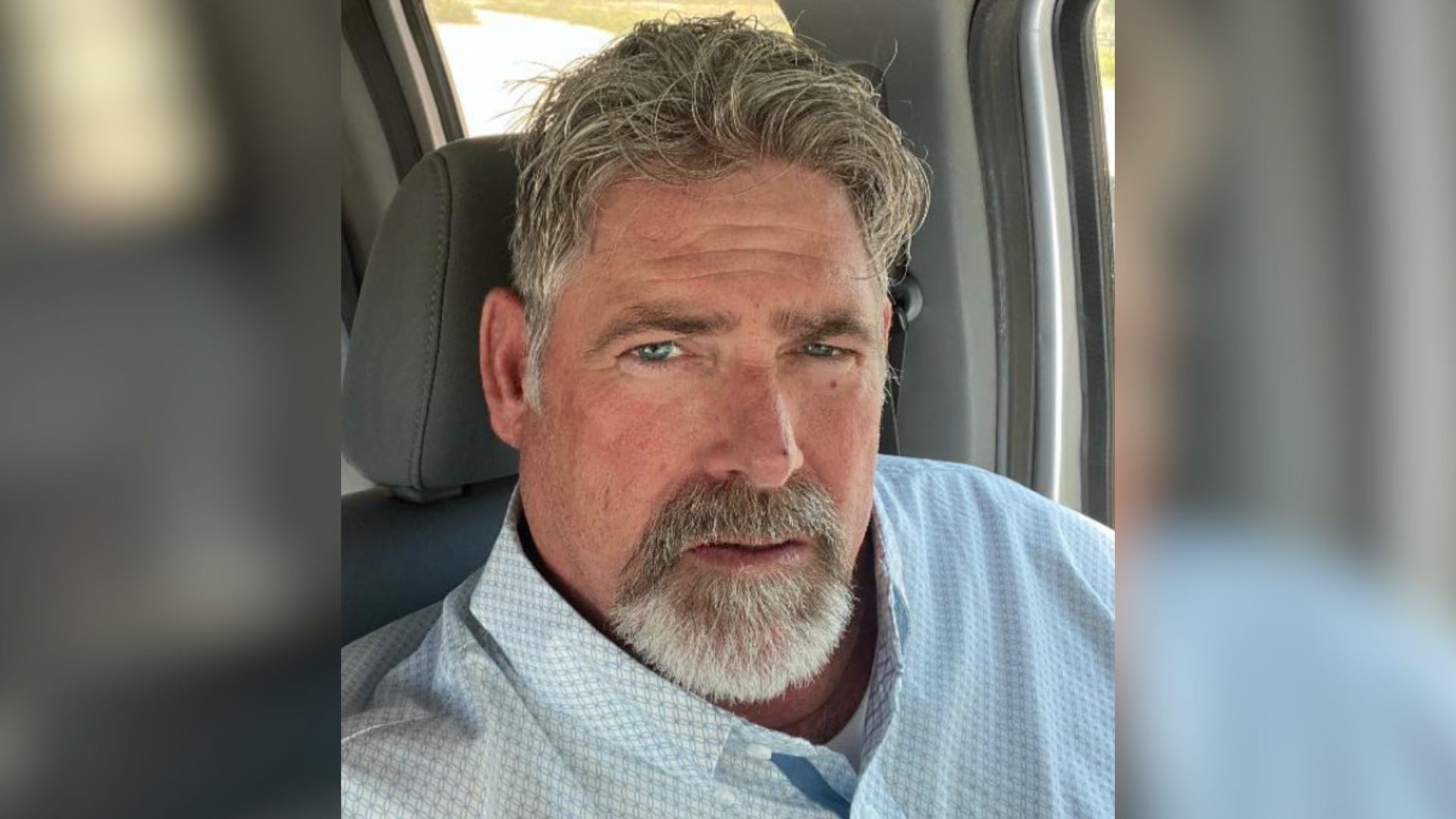
In his latest reporting for The Barbed Wire, that story comes into focus through a whistleblower named Lee Oldham. For years, Lee spread drilling waste across fields in the Dallas-Fort Worth area—waste he didn’t know was radioactive. Over time, he began to suspect something was wrong. Eventually, Lee says, his teeth began to loosen, and his jaw began to break down.
It’s a shocking claim that Saul cannot definitively prove was a result of Lee’s exposure to fracking waste. But what he can prove is that, on the very site where Lee once spread that fracking waste, developers built an elementary school where children attend class today. He says the soil has never been comprehensively tested.
In our conversation, Saul walks me through how this happens—how millions of tons of drilling waste can be legally classified as “non-hazardous,” spread across land in rapidly developing areas, buried without record, and effectively lost to history. We also talk about what we know, what we don’t, and what it would take to hold anyone accountable if those sites turn out to be unsafe.
Finally, we talk about why this might be one of the few climate-adjacent issues that could unite people across political lines.
You can listen to our interview at the top of this newsletter or on any podcast app, watch it on Youtube, or read an edited version below.
This transcript has been edited for readability. You can find a full PDF transcript, with timestamps, here.
Emily Atkin: Tell me a little bit about Lee.
Saul Elbein: Lee was an oil and gas worker in the Barnett Shale, a massive drilling region beneath the Dallas–Fort Worth area—the fourth-largest metro in the country. Around 2010–2011, he worked in waste disposal during the fracking boom.
At the time, anyone in trucking, hydraulics, or waste management suddenly found themselves working for the oil and gas industry. Lee was one of those people. He worked at what’s called a “land farm,” where solid waste from drilling operations was spread across farmland.
The waste would come in by vacuum truck, workers would unload it—often getting completely covered in it—and then spread it over fields.
EA: I didn’t even realize drilling waste gets spread on farmland at all—let alone that it could be radioactive. What is this waste?
SE: When you drill a horizontally fracked well, you generate enormous amounts of solid waste—sometimes thousands of tons. These are called “cuttings,” basically the bits of rock brought up by the drill.
The issue is that shale formations can contain toxic elements—like arsenic and uranium—that occur naturally underground.
To understand why, you have to go back about 300 million years. North Texas was once a shallow sea fed by rivers carrying minerals from ancient mountain ranges. Those minerals, including toxic elements, mixed with massive amounts of organic material from plankton and algae.
Over time, that material was compressed into oil and gas. But the toxic elements, like uranium, were compressed right along with it.
So now, millions of years later, we drill into that rock and bring all of it back up together.
EA: So we’re drilling deep into ancient rock that contains naturally occurring toxic elements, and we’re pulling that material up to the surface. And on top of that, the drilling process uses chemical lubricants, including PFAS. Is that right?
SE: Exactly. Think of it like drilling into a wall, but on a massive scale. You’re bringing up contaminated rock, and you’re mixing it with industrial chemicals used in the drilling process.
It’s a bit like that Lord of the Rings line: “The dwarves delved too greedily and too deep.” We’re unleashing things that were buried for a reason.
EA: So Lee’s job was to take this material—radioactive cuttings mixed with PFAS—and spread it on farmland. How is that legal?
SE: It comes down to how the law defines oil and gas waste. Because of a federal exemption—often referred to as the “Bentsen amendment”—oil and gas waste is legally classified as non-hazardous. That means the EPA has limited authority over it.
In Texas, the Texas Railroad Commission regulates this waste, and their primary concern is salinity: making sure it’s not so salty that it kills crops.
So under that framework, spreading waste on farmland is considered acceptable. The idea is that organic compounds will break down and the rest will mix into the soil, possibly even acting as fertilizer.
Tracy Wholf: Radioactive corn? I’m sorry, I have to jump in—I don’t want that on my farmland.
SE: And here’s where the framing gets tricky. Industry often says: yes, it’s radioactive. But so is a banana.
Even I used to think, surely it’s not really radioactive. Because if it were, no one would allow this, right?
But we’ve known for years that oil and gas operations expose workers to radiation. There have been major payouts over it. It’s not new.
The problem is: when something becomes normalized, it stops seeming alarming—even when it should be.
EA: So how did Lee start to suspect something was dangerous?
SE: One day, he heard that metal tracks from his equipment had been rejected by a scrap yard after testing positive for radiation.
That made other moments click into place—like seeing a worker lying on a pipe and being warned to get off it if he wanted to have kids.
Lee started to realize this wasn’t isolated. He did some research and found that oil and gas operations commonly involve radiation exposure.
He asked his employer for protective equipment and medical testing. Instead, he was told he was “too smart for his own good” and reassigned.
EA: And then something happens to Lee physically. It seems there was a medical incident. Can you tell us about that?
SE: Years later, while working on a remediation site, he got a face full of dust from dried drilling waste.
Over time, his teeth began to loosen. His jaw deteriorated. His vertebrae started breaking down and fusing. By his 50s, he struggled to eat solid food, like an apple.
Now, we can’t definitively say what caused this. There hasn’t been comprehensive testing.
But we do know that radium—a decay product of uranium—is a bone-seeking carcinogen. It can accumulate in bones and emit radiation from inside the body.
So while we can’t prove causation, the mechanism is plausible and deeply concerning.
EA: When did Lee realize this might affect more than just him?
SE: Years later, he returned to Johnson County and discovered that an elementary school had been built on the very site where he had spread drilling waste.
That school is operational today.
EA: Have they tested the soil?
SE: Not in a meaningful way. There was a Phase I environmental assessment before construction, but that’s essentially a visual inspection. It explicitly does not detect hidden contamination.
A Phase II—which involves actual soil testing—was not conducted, or at least not shared.
Now, after public pressure, the school district says it will conduct testing.
EA: Zooming out, how big is this problem?
SE: In the Dallas-Fort Worth area alone, there have been around 21,000 fracked wells. Each one produces thousands of tons of waste. That adds up to tens of millions of tons, much of it spread on land in rapidly growing suburban areas.
And in Texas, companies can legally bury waste without notifying landowners. So we’re talking about vast quantities of potentially hazardous material, spread or buried in places where people now live, work, and go to school.
EA: Has there been public outrage?
SE: Locally, yes. Parents are concerned, and the school district is now funding soil testing. But broadly, this hasn’t yet become a major national issue.
That said, I think it will. This cuts across political lines. Nobody wants toxic waste near their kids.
EA: So how are you able to verify Lee’s story? Because if I’m approaching this as a skeptical listener, I’m thinking this could just be some left-wing Democrat plant trying to destroy the oil and gas industry. He’s making this up, his jaw is fine, and you’re just eating it all up.
SE: You would not be alone in having that opinion.
But what we do know is there was a land farm there. We do know there were complaints about the stuff coming off that land farm—fumes ruining paint on people’s cars, giving them headaches—for years before that site was built.
And since I published the story, I put out a survey in the community. We know there are at least some number of parents with kids at that school whose kids have consistent complaints of headaches, nausea. One mother said her daughter is like a different kid during breaks. Another said she thought her kid was faking being sick to get out of school, and now realizes maybe it’s much worse.
And I gotta say too: Lee, having sat in his work truck and talked to him for 30 seconds, there was no question he was a former oil worker, son of Cleburne, Trump voter. He is, for better and worse, exactly what he appears to be. And I know that in part because that’s been the assessment of everybody from the oil and gas world I know who’s talked to him.
So summing that up, we have a credible witness making a credible claim about the kind of stuff everybody knew was happening everywhere, in a system where there was very little scrutiny to make sure it wasn’t happening.
And so I would say the burden of proof is on the regulators and the developers to prove that the site was safe.
TW: Is this just a Texas problem, or are these types of rules and regulations rampant across the country?
SE: So this specific flavor is a Texas and Oklahoma problem, because in Texas and Oklahoma you can spread drilling waste on farmland.
Pennsylvania has a different version of the problem. In Pennsylvania, you just dump it in landfills. And are those landfills properly lined? Who’s to say? In North Dakota, it’s a different version of the problem.
Waste is the issue, I would argue. I would say even beyond that, waste is the issue that supermajorities of Americans are opposed to, however they feel about oil and gas.
I spent a lot of time in Johnson County talking to people who are very conservative, who are very skeptical of renewables, who don’t share my views on energy policy. There’s not one of them that’s comfortable with, for example, used fracking fluid—ostensibly cleaned up—being put on crops, something that’s going to start in Texas pretty soon.
Nobody’s okay with a school being built on drilling waste if it’s toxic. Now, there will be arguments about whether it’s toxic—but if it is, nobody’s for this.
And so we have a situation where essentially the ability to dump waste, and the ability to keep that waste secret, is subsidizing fossil fuel company operations. And that’s a global problem.
EA: What does this story mean for the broader climate movement? What should people who care about climate be taking from this?
SE: Well, one thing is that climate is a waste story too. Carbon dioxide doesn’t get tracked, it doesn’t get accounted for—and in fact, the industry knocking down the endangerment finding at the EPA, that’s part of the same story. If we don’t track the carbon waste, it’s not happening, right?
But there’s also a bigger strategic and tactical lesson here, which is that very few people affirmatively want to read climate stories—barring the lovely listeners of this podcast and readers of our work. But everyone wants to read a crime story. Lots of people care about their health.
And there are huge numbers of people who may not agree with us on oil and gas policy, but who don’t think the industry should be able to dump its waste. People who are used to cleaning up after themselves, who think industry ought to do the same.
So in terms of building big, cross-partisan coalitions with people who don’t agree with us on everything but are directionally pointed the right way—we could do a lot worse than focusing on crime, health, and waste.


