
What oil actually costs
The market price of oil has never reflected its true cost. This week made that impossible to ignore.

The war in Iran has everyone talking about the price of oil. But that number only reflects a small fraction of what oil actually costs.
While talking heads focus on oil's market price—shaped by supply disruptions, geopolitical risk, and expectations about future availability—millions are bearing the rest of the bill in ways that never show up at the pump: in the smoke and terror of war, in the heat and floods of a destabilized climate, and in the explosions and toxic fallout that come with living near oil infrastructure.
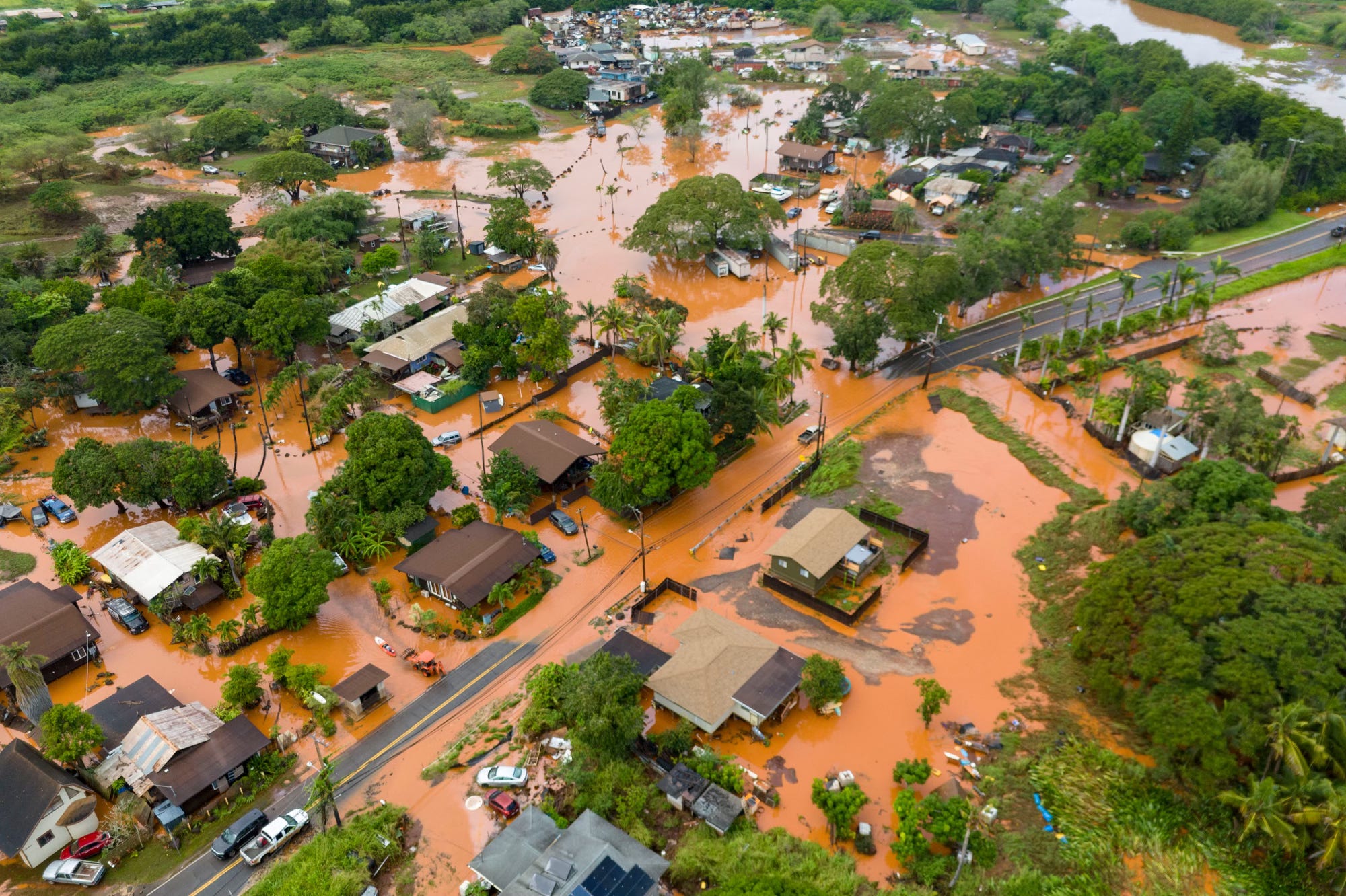
The flooding in Hawaii this weekend offers one of the clearest examples. Back-to-back Kona storms unleashed what Governor Josh Green called “the largest flood that we’ve had in Hawaii in 20 years,” submerging roads, destroying homes, and forcing hundreds of rescues across the islands. On the ground, officials described scenes of near-total devastation—families returning to find their homes flooded out, entire communities cut off, and more than 200 people pulled from rising water.
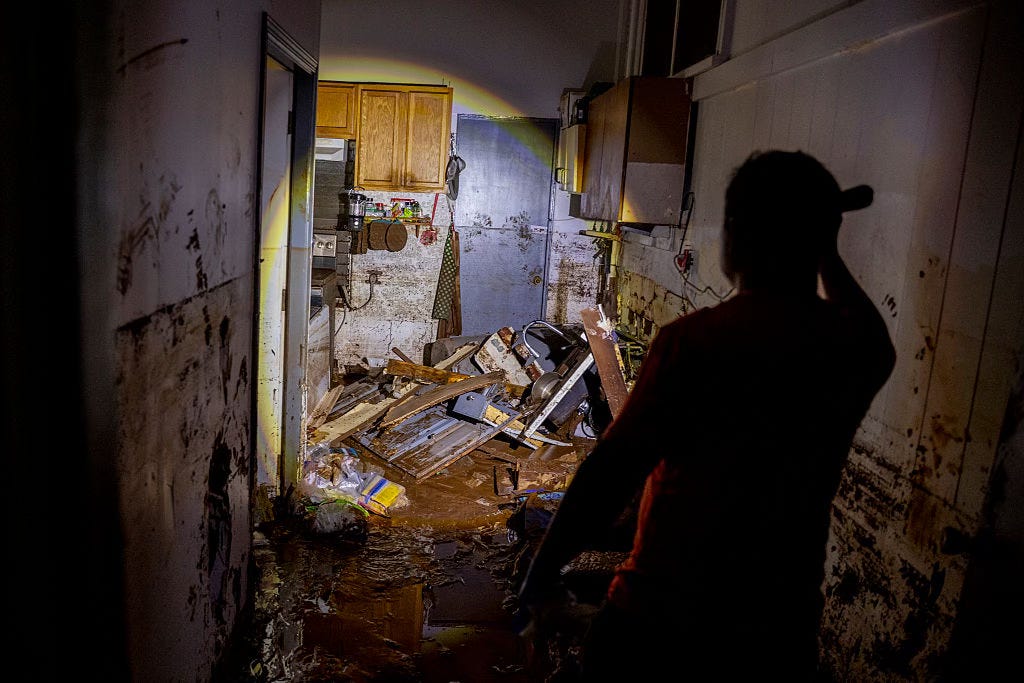
Scientists have been warning for years that excessive fossil fuel burning will cause more catastrophic floods like this. That’s because fossil fuels release greenhouse gases, which warm the atmosphere, and a warmer atmosphere holds more moisture. That makes extreme rainfall more intense.
But these impacts never factor into the price of a barrel of oil. They’re pushed onto everyone else—through disaster cleanup, insurance losses, and taxpayer-funded relief. In Hawaii, the damage is already estimated to exceed $1 billion, with state officials asking the federal government to cover up to 90 percent of the recovery costs. Whether that aid comes through or not, the bill is being paid by the public, not the industry whose emissions made disasters like this more likely.
That’s why Hawaii is among many states trying to force a correction. Last year, the state’s attorney general filed a lawsuit against major fossil fuel companies, arguing they should help pay for the climate damage their products have caused and the public has been left to absorb.
“The State of Hawaiʻi’s lawsuit is based on well-established legal principles: Those who have contributed to a problem should help address its consequences,” Toni Schwartz, a spokesperson for the Hawaii attorney general’s office, told HEATED. As climate-fueled extreme weather places increased financial strain on Hawaii, Schwartz said, “Our office is committed to ensuring that the costs of these impacts are not placed solely on Hawaiʻi’s people.”
The Trump administration, however, is working to make sure these costs never shift away from the public. Earlier this year, the Justice Department moved to block Hawaii’s lawsuit—along with a similar case in Michigan—arguing that states should not be allowed to hold fossil fuel companies financially responsible for climate damage. The intervention is part of a broader effort to shield the oil and gas industry from a growing wave of litigation and state laws seeking to make polluters pay for the consequences of their emissions.
The Trump administration is also spending public money to ensure the public is trapped with whatever the cost of oil may be. This week, the Trump administration announced it would give nearly $1 billion in taxpayer money to a French oil company—not for anything the company built, but to make sure it didn't build two offshore wind farms. The deal requires the company to take that billion dollars and invest it in oil and gas instead.
Trump is trying to frame the offshore wind project stoppage as a good deal for Americans. At an energy conference in Houston on Monday, Interior Secretary Doug Burgum said, "The era of taxpayers subsidizing unreliable, unaffordable and unsecure energy is officially over.” Later that day, one of America’s largest oil refineries exploded, forcing thousands of nearby residents to shelter in place and spiking gas and diesel prices nationwide.
This is what the true price of oil looks like: Hawaiians wading through their flooded homes while the state scrambles to find a billion dollars for cleanup; Texans sheltering indoors from refinery smoke while gas prices climb; Iranians and Lebanese caught in the crossfire of war; and taxpayer money being handed to oil companies to deepen our dependence on the very thing causing all the damage.
What happens to Hawaii’s lawsuit—and the dozens like it filed by cities and states across the country—may be the clearest indicator of whether any of that ever changes.
More recent costs of oil:
The toxic fallout of US-Israeli attacks will be felt for generations. (March 17, Canary Media)
The toxic fallout of the unprovoked, illegal US-Israeli war against Iran will haunt the region for generations. The Conflict and Environment Observatory (CEO) says the pollution produced by military strikes could have terrible long-term effects.
Record-breaking March heatwave, intensified by climate change, continues to shatter records across the U.S. (March 24, Climate Central)
Hundreds of high-temperature records across the western half of the United States were broken last week as an early-season heatwave, driven by human-caused climate change, brought July-like heat to millions of people. The impacts are not over — more records are expected to fall this week, March 24-27.
Climate-fueled wildfires and dust storms drove up air pollution around the world last year. (March 24, Inside Climate News)
A new report on global air pollution shows that the majority of the world’s population breathes unhealthy air, and climate change is making the problem worse.
The balance that keeps climate stable is out of whack, U.N. report finds. (March 22, New York Times)
Under a stable climate, about the same amount of energy comes in from the sun as is reflected back. Now, however, emissions of heat-trapping greenhouse gases — carbon dioxide, methane and nitrous oxide — have surged to their highest level in at least 800,000 years and have upset this equilibrium, the researchers found.
$580 million in suspicious oil futures traded minutes before Trump’s Iran reversal. (March 24, Fortune)
Roughly $580 million worth of oil futures changed hands in a single minute early Monday morning, only about 15 minutes before President Trump posted on Truth Social that the U.S. had been engaged in “productive conversations” with Iran to end the war. Now Nobel Prize-winning economist Paul Krugman is calling what he sees: treason.
It is such a foreboding feeling to be "climate aware" (place yourself on the spectrum of climate doom / darkness) go about your day encountering so few people seem to be even modestly concerned. It really makes you question your own sense of reality; "This has got to be a simulation, like candid camera, right?"
And every time we pump, we pay the oil industry and its lobbyists to keep doing exactly what they're doing. We're the employer. We create demand. Drive less, use transit, go electric.