

I hate conspiracy theories. I always have. As a journalist, they’re usually the thing I’m pushing back against.
And yet, for a few years now, I’ve found myself saying something slightly heretical on panels and in conversations with other reporters: we need to start engaging in more overtly conspiratorial language. Because the actual story of climate change—the one we’ve reported exhaustively—is one about coordinated power, deliberate deception, and a bought-off government that repeatedly acts to promote an industry that is poisoning humans and the environment for profit. It just so happens to be a real conspiracy.
The Trump administration’s recent invasion of Venezuela has put this conspiracy at the top of the news cycle. Trump framed the attack explicitly as an oil play, bragging about handing Venezuela’s oil infrastructure to U.S. companies. He said he privately briefed oil executives in advance of the attack, but did not inform Congress. He made clear that if U.S. companies were hesitant to enter Venezuela, U.S. taxpayers would step in to shoulder the financial risk.
These statements strip away every remaining excuse for decorum. When a president deploys military might and taxpayer dollars to expand Big Oil’s power, journalists and climate advocates shouldn’t be afraid to say why that’s really happening—or to use the kind of language that makes it finally click in people’s brains.
If there were ever a moment to embrace climate conspiratorial language, it’s now. If we don’t, we’ll miss a rare chance to show the public who the government really works for, and who pays the price.
Here’s how I’d put it, if anyone needs a hand.
A climate script for the conspiracy-minded
You may think that the biggest climate conspiracy is chemtrails. You’d be wrong.
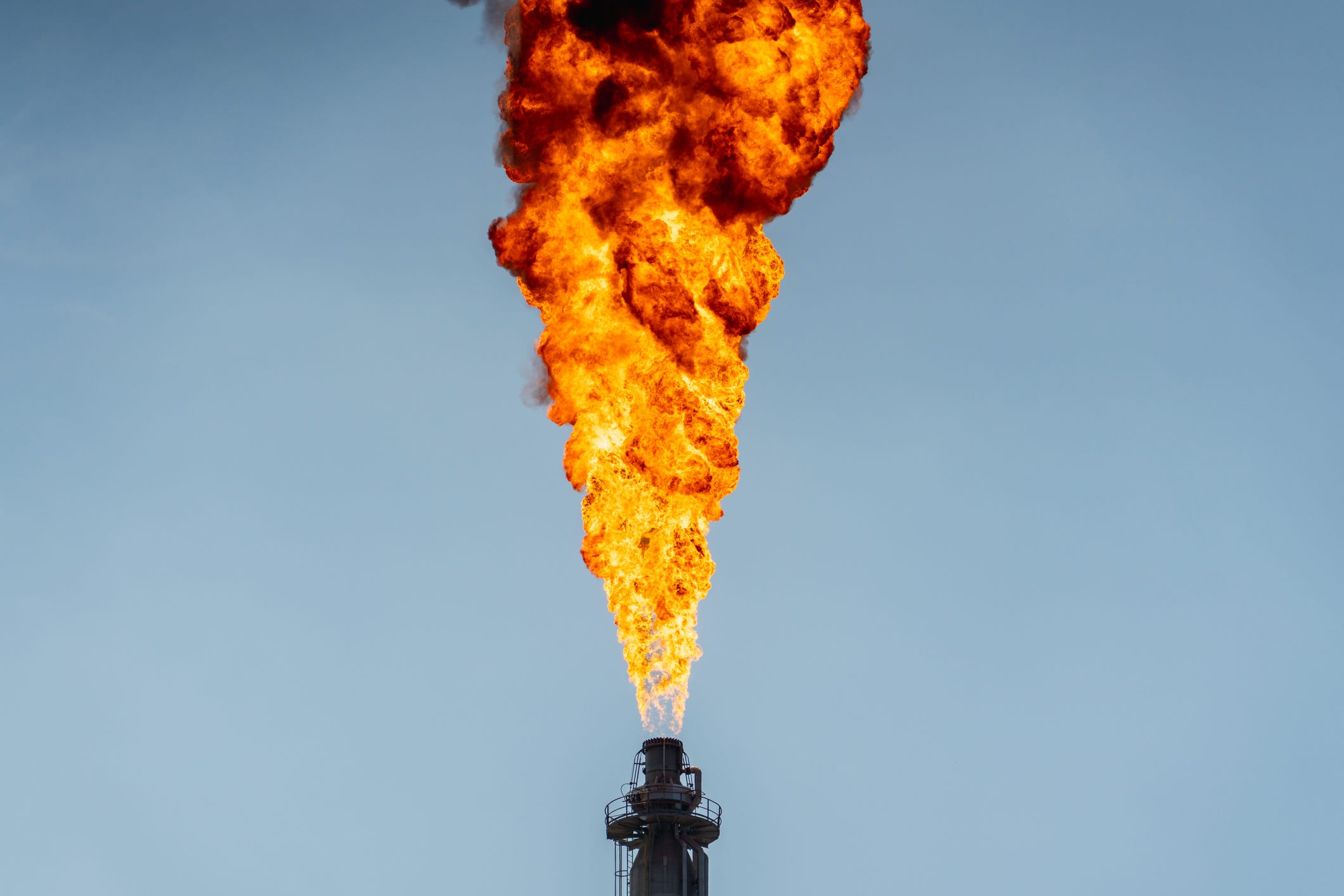
But climate-altering chemicals are being dumped into the atmosphere at an astonishing rate. And the government is actively trying to cover up what’s happening, why it’s happening, and who it hurts.
Airplanes aren’t the ones releasing world-changing amounts of climate-altering chemicals into the sky. Fossil fuel companies are. Fossil fuel operations are notorious for emitting massive amounts of greenhouse gases into the atmosphere, mainly carbon dioxide and methane. Just look at these graphs showing how much heat-trapping gas has accumulated in the atmosphere over time.

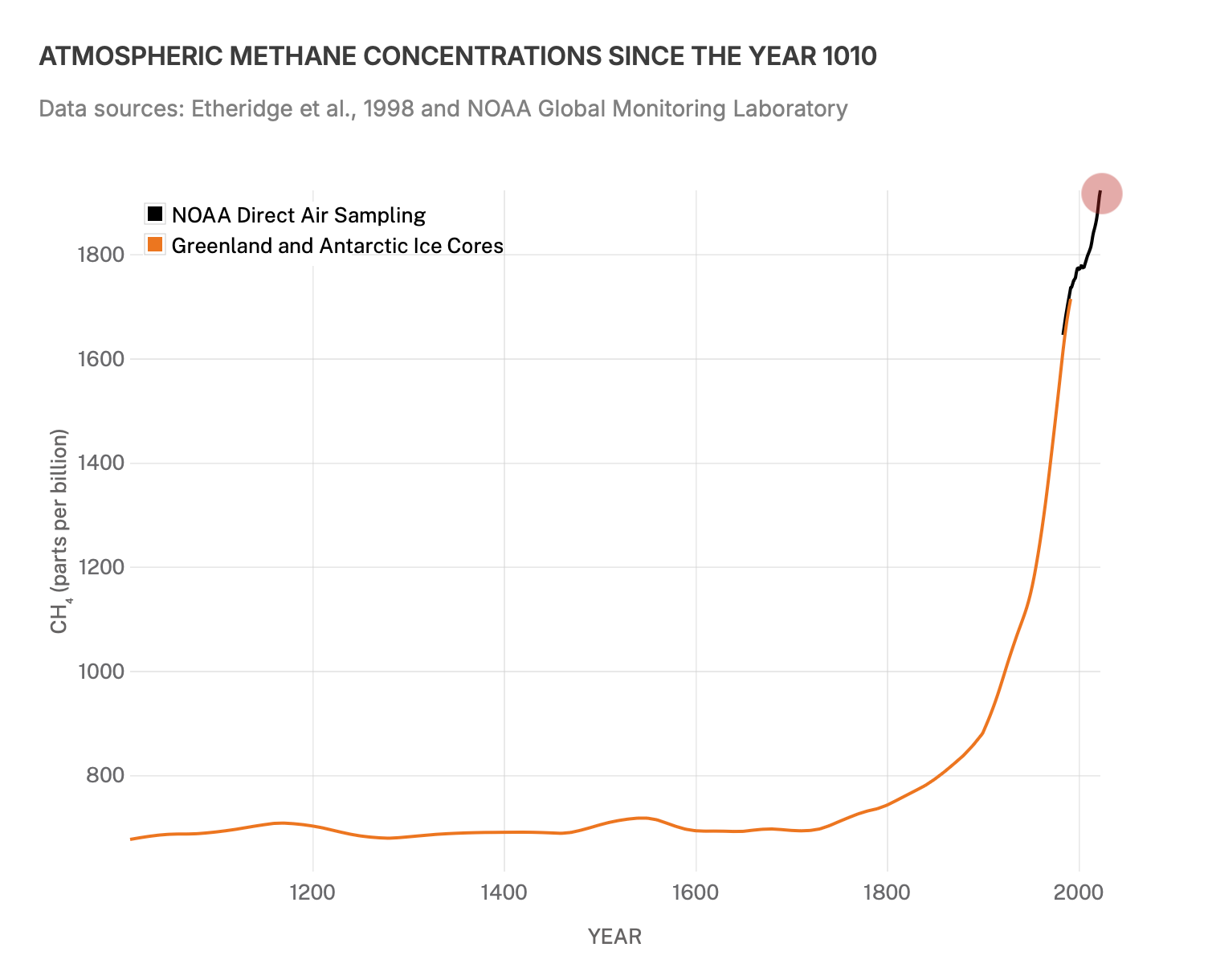
The U.S. government is actively trying to cover up these numbers. Since taking office, Trump has proposed shutting down the country’s longest-running carbon dioxide monitoring station. He’s secretly directed NASA employees to draw up plans to destroy two satellites that monitor global carbon dioxide levels. And he’s moved to end the program that requires fossil fuel companies to track and report greenhouse gas emissions from more than 8,000 facilities.
The government has also been working overtime to cover up the massive harm this pollution causes. Trump has altered or deleted nearly every federal scientific report and web resource that’s come out in the last two decades showing that climate change is killing people, costing money, and making us less safe. He says it’s because all the studies are flawed and alarmist. Really? All of them? Every single one?
The real reason the government is doing this is simple: Because it’s bought and paid for by Big Oil, the most profitable and powerful industry in the world. Before the election, Trump promised oil executives he would give them whatever they wanted in exchange for campaign support, floating a $1 billion price tag. How much the industry actually gave is impossible to know, thanks to dark money and opaque PACs. But from what we can see, Big Oil spent $219 million to influence the 2024 election, with at least $75 million going directly to Trump’s campaign and affiliated PACs. Eighty-eight percent of oil and gas money went to Republicans.
And now, the government is deploying the U.S. military to help the industry dump even more of these climate-altering chemicals into the atmosphere.
Trump explicitly stated his intention for the U.S. to control Venezuela’s oil. He laid it out plain as day: “We’re going to have our very large United States oil companies, the biggest anywhere in the world, go in, spend billions of dollars, fix the badly broken infrastructure, the oil infrastructure, and start making money for the country.”
Trump didn’t tell Congress about the Venezuela attack before it happened. But he did claim to tell oil executives. Let that sink in. The president reportedly informed private oil companies about a military invasion before informing the people’s elected representatives. So who does the government work for, exactly?
The oil industry has tried to deny receiving advance notice prior to the invasion—but only through anonymous sources. To this I remind you: Oil companies are notorious liars. They spent decades lying about climate change, burying their own research showing fossil fuels were destroying the planet, and funding disinformation campaigns to confuse the public. If they really didn’t speak to Trump, why don’t they say it loudly and proudly?
Now, plenty of people have correctly pointed out that it will be difficult and expensive for U.S. oil companies to take over Venezuela’s oil. But that’s much less of a problem when the government works for you. After industry sources told CNN that oil companies “were reluctant to commit to reinvesting” in Venezuela, Trump immediately fell over himself to offer to help them—with taxpayer money, of course. Trump said oil companies rebuilding Venezuela’s infrastructure will “get reimbursed by us, or through revenue,” with the U.S. government potentially subsidizing efforts by energy companies to rebuild the country’s oil industry.
Oil companies are trying to publicly act like they don’t want Venezuela’s oil. But here’s what’s indisputable. Chevron’s stock soared as much as 10 percent after the invasion. Exxon and ConocoPhillips shares rose around 3 to 4 percent. Oil service companies like SLB, Baker Hughes, and Halliburton jumped between 4 percent and 9 percent. And U.S. refiners Marathon Petroleum, Phillips 66, PBF Energy, and Valero Energy were up between 3.4 percent and 9.3 percent.
Another thing that’s indisputable: Venezuela’s new acting president, Delcy Rodríguez, is the country’s oil minister. She’s long been the go-to contact for senior oil executives, with strong ties to Republicans in the oil industry who actively pushed for her to lead post-Maduro Venezuela. I’m sure that’s just a crazy coincidence.
Perhaps all of this could be defensible if the outcome for ordinary Americans were actually positive. Trump insists it will be—that oil expansion means jobs, security, and prosperity.
That claim is the heart of the conspiracy. It’s not that Trump and the oil industry are working together; that part is in plain sight. It’s that the public is being told this partnership exists for our benefit, when in reality it exists to preserve fossil fuel dominance in a world where that dominance is threatened by people simply understanding the truth—that oil and gas pollution is transforming the climate, making us sicker, poorer, and less safe.
That’s why Trump works to obscure emissions data, suppress climate science, and discredit anyone who explains the harm. It’s why he’s willing to spend taxpayer money, deploy military force, and rewrite foreign policy. Not because any of this serves the public interest, but because all of it serves the same goal: keeping fossil fuels flowing, even as the scientific case for transitioning away from them becomes overwhelming.
And doing that requires a public that is less informed, more economically strained, and easier to distract—too busy coping with rising costs and mounting crises to demand a transition that would reduce pollution, lower long-term costs, and make wars over energy unnecessary.
So no, you don’t need to worry about chemtrails. You need to worry about who controls energy—and what they’re willing to do to keep it that way.
Further reading:
Trump taking ‘drill, baby, drill’ plan to Venezuela ‘terrible’ for climate, experts warn (The Guardian)
Why the federal government is making climate data disappear (Grist)
The U.S.-Venezuela-Guyana Oil Triangle (Drilled)
U.S. to control Venezuela oil sales “indefinitely,” Energy Secretary says (New York Times)
Trump to meet with oil execs about Venezuela on Friday (Politico)
Catch of the Day: Grey cat Ethel would never roll over on her belief that everyone deserves a safe climate. But she would maybe roll over for a belly rub.

Thanks to reader Agnes for the submission.
Want to see your furry (or non-furry!) friend in HEATED? Send a picture and some words to catchoftheday@heated.world.
Don't forget: Venezuela oil is sour. I.e it has a high sulfur content which makes it harder to process and more corrosive than sweet oil such as those found in the United States. Our refining capacity is able to process crude oil that is sour so that's why we are shipping tar sands to the gulf of Mexico from Canada, which is also high in sulfur. Those refineries could easily take on the Venezuelan capacities as well. Unfortunately, in addition to creating more acid rain, sour crude also emits more carbon so it is worse for climate change. Surprise surprise!
Thank you for telling it like it is. It's almost refreshing to have a government that is so bad at covering up the real reasons for their actions. Everything is out in the open now. Hopefully people don't buy the crap about more jobs or lower gas prices and see this as the equivalent of a giant handout for Big Oil.